What you are being told
These are the claims that appear again and again in structured-water marketing, next to what can actually be checked.
Our device arranges water into hexagonal clusters, the same structure as healthy cells.
Structured water is H₃O₂, a fourth phase of water.
It hydrates you better and gives you more energy.
Lab tests prove our water has smaller clusters.
Water remembers words, music and intentions, as the crystal photos show.
Magnets structure water and lower blood sugar.
Water does have structure. It just doesn't last.
Every water molecule is a small V: one oxygen, two hydrogens. Neighbouring molecules cling to each other with hydrogen bonds, so liquid water is a tangled, constantly shifting network. In ice, that network locks into hexagons, which is why snowflakes have six arms.
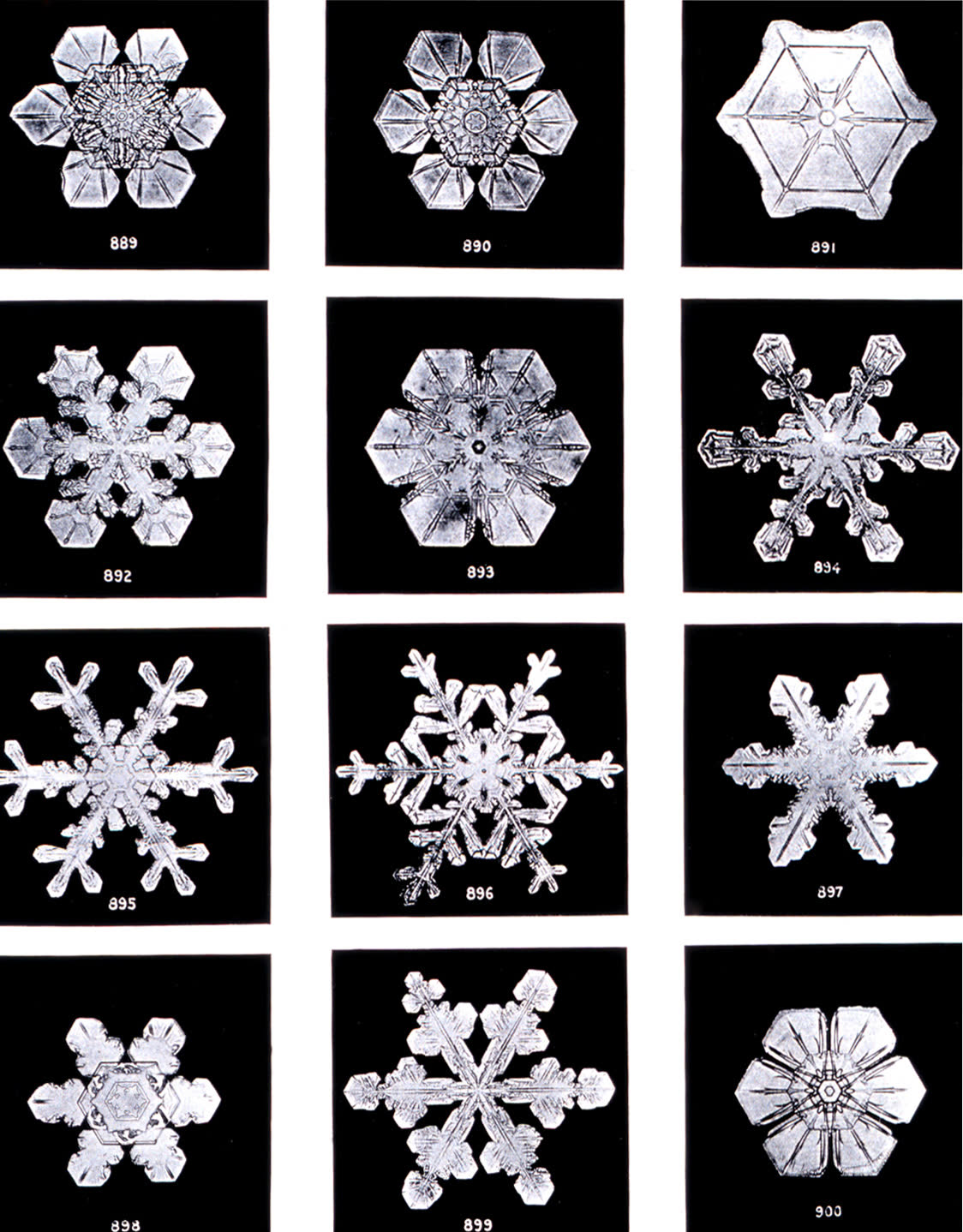
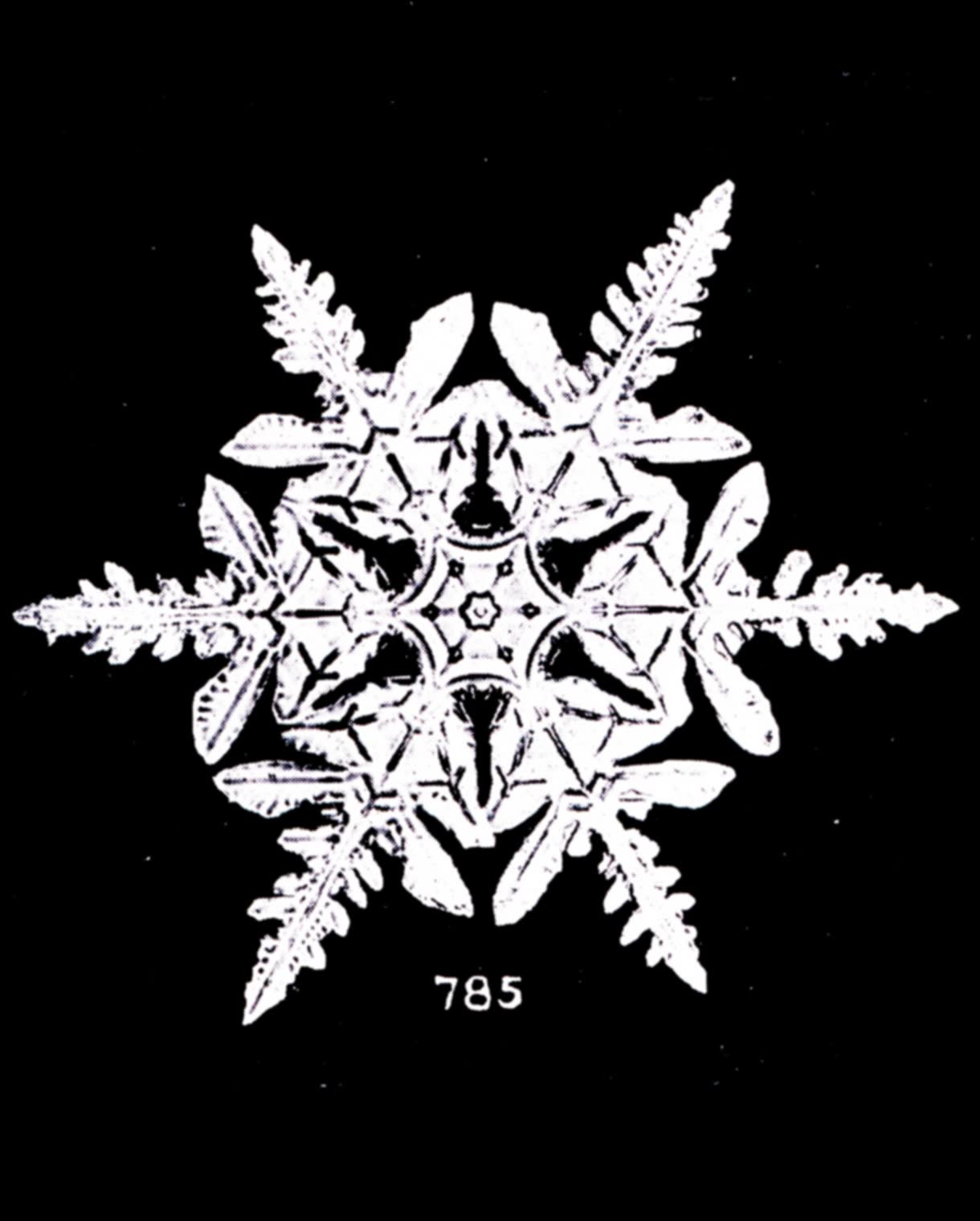
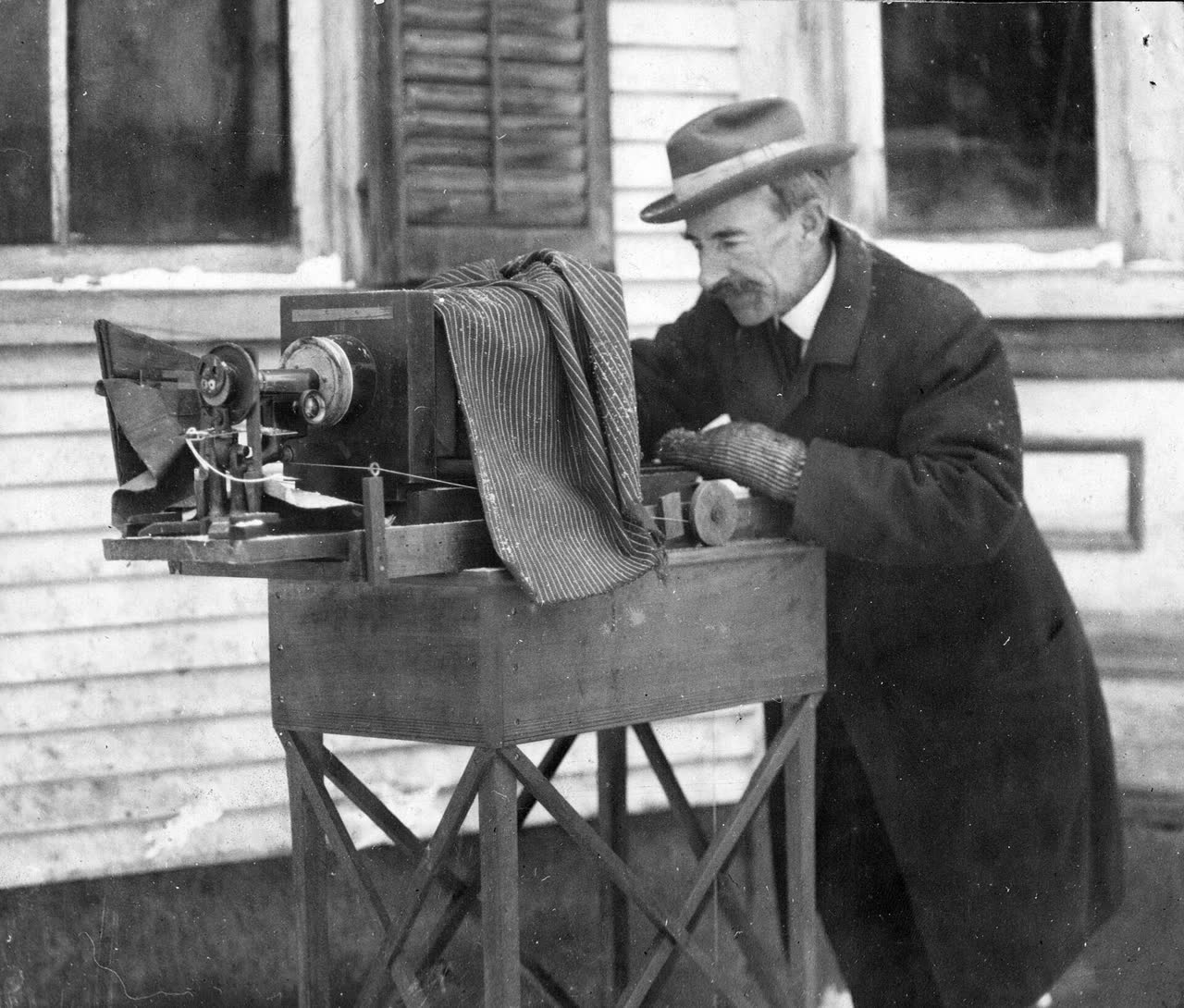
How long does "structure" last in liquid water?
Measured with femtosecond infrared lasers (Fecko et al., Science, 2003): hydrogen bonds vibrate every ~170 femtoseconds, and the whole network rearranges within about 1–3 picoseconds. Here is that next to everyday events, on a scale where each step is 1,000 times longer than the last.
Whatever arrangement a device creates in the bottle has been reshuffled trillions of times before the water reaches your stomach.
Water near surfaces really is more ordered, by a few molecules
X-ray, neutron and ESR studies show ordered layers of water a few molecules thick (around a nanometre) around proteins, cell membranes and other surfaces. Biology depends on it. It happens to all water automatically, wherever there is a surface, and it is not something you can bottle and drink.
Every study we found, scored
Each entry says who did it, what they found, the catch, and a verdict on what it means for the claim that structured water is healthier to drink.
Pollack's exclusion zone, and two ways to explain it
Put a water-loving material such as Nafion in water with tiny beads, and the beads move away from the surface, leaving a clear band up to a few hundred micrometres wide. Gerald Pollack (University of Washington) says this is an ordered "fourth phase" of water. A 2020 critical review found the effect replicated by at least ten labs, and that ordinary chemistry explains it well.
2 µm latex beads retreating from a Nafion sheet, forming the exclusion zone. Video: Gerald H. Pollack, CC BY-SA 4.0.
Pollack's view: water next to the surface stacks into an ordered, negatively charged layer (which he writes as H₃O₂) that physically squeezes the beads out.
Can you spot the "thanked" water?
Masaru Emoto's books show beautiful ice crystals from water exposed to kind words and ugly ones from water exposed to insults. In his photos the person choosing which crystal to photograph knew which was which. Here, half of these crystals came from "thanked" water and half from "control" water. Pick the six you think were thanked.
Every crystal here was generated at random by the same code; the labels were assigned by coin toss. Whatever you score is luck. That is exactly the situation a blinded experiment is built to detect.
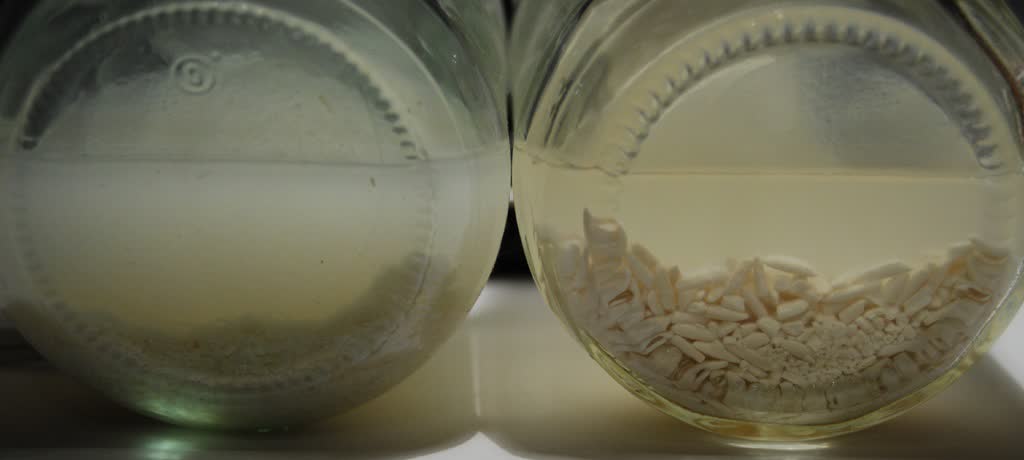
In 2006 and 2008 Dean Radin's team, with Emoto as co-author, ran double- and triple-blind versions. Judges rated crystals from "intention" water slightly more beautiful (p = 0.001 and p = 0.03, one-tailed). Neither was replicated by an independent lab. Beauty ratings are subjective, and both were published in journals that specialise in fringe topics. None of it tested health.
Why one positive study is not proof
Run 20 fake studies where the "structured" and ordinary water are identical. Watch how often pure chance produces a "significant" result. If only the lucky study gets published, it looks like evidence.
Each tile is a simulated study of 20 people per group drawn from the same population, tested at p < 0.05. On average about one in twenty comes out "significant" by chance. That is why scientists look for independent replication and pre-registered trials before believing a result.
Water has fooled clever people before
Structured water is the latest in a long line of exciting water discoveries. The earlier ones had real scientists, real data, and simple explanations in the end.
- 1962 – 1973
Polywater
Soviet chemists Nikolai Fedyakin and Boris Deryagin report a thick, dense "polymer" water formed in glass capillaries. Hundreds of papers follow. In 1970–71 Denis Rousseau at Bell Labs shows the samples are contaminated with silica from the glass and with sweat. Deryagin concedes in 1973.
- 1988
The "memory of water"
Nature publishes Jacques Benveniste's paper claiming water remembers antibodies diluted out of existence. An investigation team led by editor John Maddox, with James Randi, oversees blinded repeats. With the vials secretly coded, the effect disappears.
- 1999
Emoto's crystal photos
Messages from Water becomes a worldwide bestseller. The method is not blinded.
- 2003
Penta Water lawsuit
A class action over false advertising ends with the "hexagonal" Penta brand barred from claiming health benefits. A scientist listed as backing its research asks for her name to be removed.
- 2003
Water caught in the act
Femtosecond laser experiments (Science) show hydrogen-bond structures in liquid water rearrange in about a picosecond.
- 2013
The Fourth Phase of Water
Gerald Pollack's popular book launches today's structured-water market. The same year, J. Michael Schurr publishes a diffusiophoresis explanation for the exclusion zone.
- 2020
Critical review
Daniel Elton and colleagues review exclusion-zone research in the International Journal of Molecular Sciences: the effect is real, the "fourth phase" interpretation is not needed.
NASA astronaut Scott Kelly plays "ping pong" with a ball of water on the International Space Station, 2016. Surface tension, from those same hydrogen bonds, holds the ball together. Public domain.
Water droplets rolling on a water surface before merging, from Pollack's lab. Video: Gerald H. Pollack, CC BY-SA 4.0. Real, beautiful physics, but not a health claim.
If you want better hydration
Hydration has been tested properly. What matters is how much you drink and what is dissolved in it, not how the molecules are "arranged".
Some drinks hydrate for longer than plain water.
Hydrogen water is a different thing.
Clean, safe water is what counts.