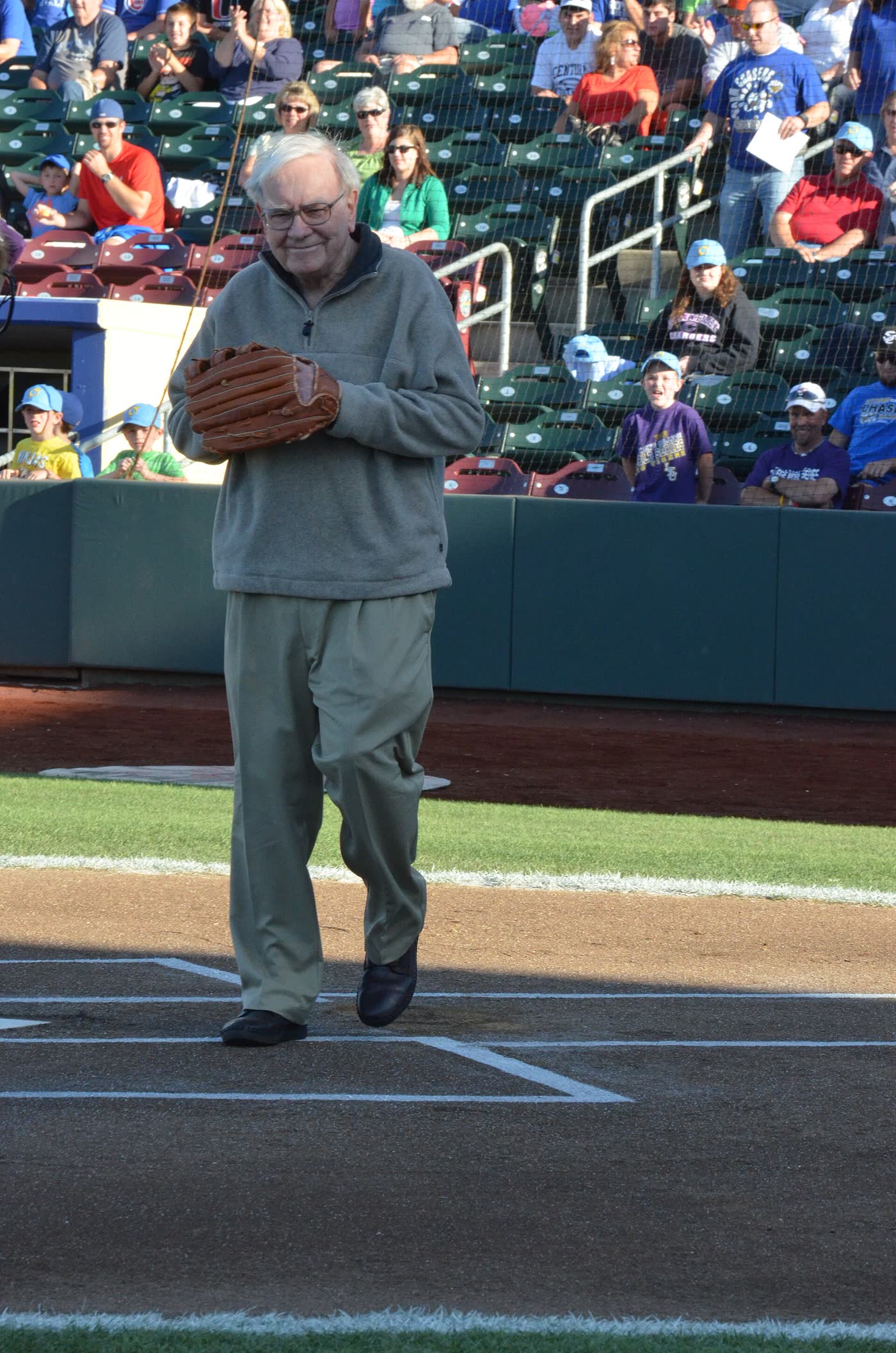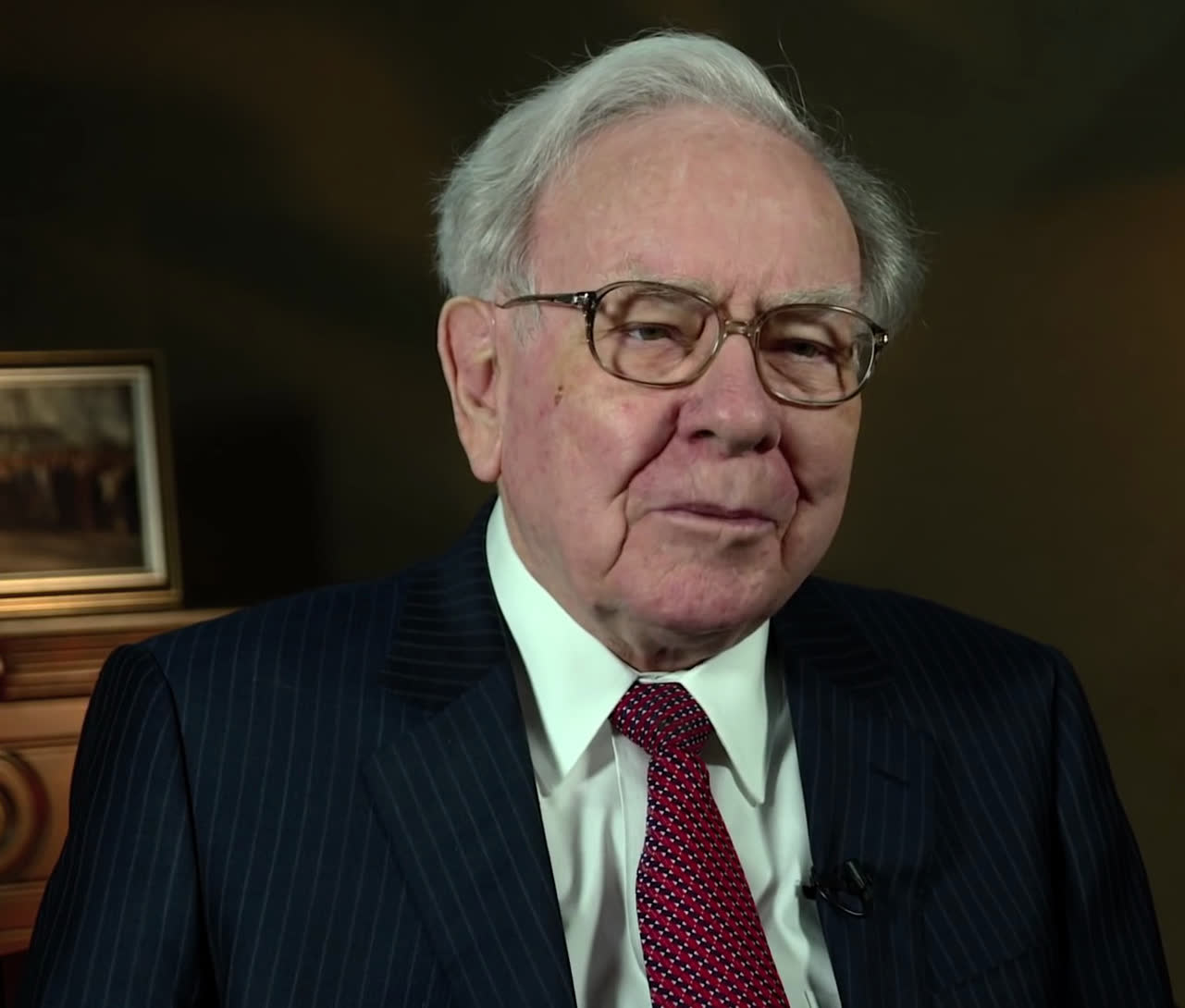
"Life is like a snowball. The important thing is finding wet snow and a really long hill."Warren Buffett · it became the title of Alice Schroeder's 2008 biography, The Snowball
The wet snow is compounding: returns that earn their own returns. The long hill is time. Buffett started at 11 and is still at Berkshire at 96. That combination, more than any single deal, explains the fortune.
About 97% of the fortune arrived after he turned 60
Approximate net worth by age, from his own accounts and the Forbes lists. On a normal scale the line looks flat for 55 years and then shoots up. On a log scale, the same numbers show steady compounding the whole way.
The Omaha boy
Gum, Coca-Cola, golf balls, newspapers and pinball machines.
- 30 August 1930
Born in Omaha, Nebraska
Warren Edward Buffett is born ten months into the Great Depression, the second of three children of Leila and Howard Buffett. Howard is a stockbroker who later serves four terms in Congress.
- Age 6 · 1936
The six-pack business
On a family holiday he buys six-packs of Coca-Cola from his grandfather's grocery store for 25 cents and sells the bottles one at a time for a nickel each.
Six bottles, 25 cents, a nickel each
Tap the bottles to sell them. Each pack costs 25¢ and brings in 30¢, a 20% return on every pack.
- 1941 · age 11
His first stock: Cities Service preferred
He buys three shares at $38 each for himself and three for his sister Doris. The price falls to $27, then recovers to $40, and he sells for a $5 profit. Soon after, it climbs to $202 a share.
Shape only, not drawn to an exact timeline. He took two lessons from it: don't fixate on the price you paid, and don't rush to grab a small profit.
- 1943 · age 13
His first tax return
Delivering the Washington Post after his father's election moves the family to Washington, D.C., he earns enough to file a return. He deducts his bicycle and watch as business expenses, about $35.
- 1944 – 1947 · age 14–17
Farmland and pinball
He buys a 40-acre Nebraska farm for about $1,200 and rents it to a tenant farmer. With a friend, Don Danly, he puts reconditioned pinball machines into barbershops, earning about $50 a week. He finishes high school with about $5,000 saved.
Graham's student
One book, one teacher, and a Saturday visit to GEICO.
- 1947 – 1950
Wharton, then Nebraska, then a Harvard rejection
He spends two years at Wharton, finishes his degree at the University of Nebraska at 19, and is turned down by Harvard Business School after a ten-minute interview.
- 1949 – 1951
The Intelligent Investor, then Columbia
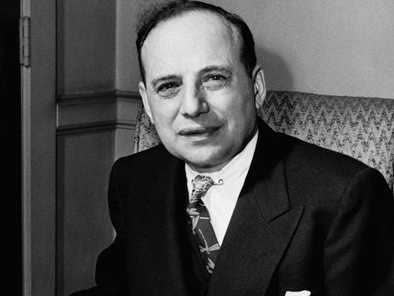
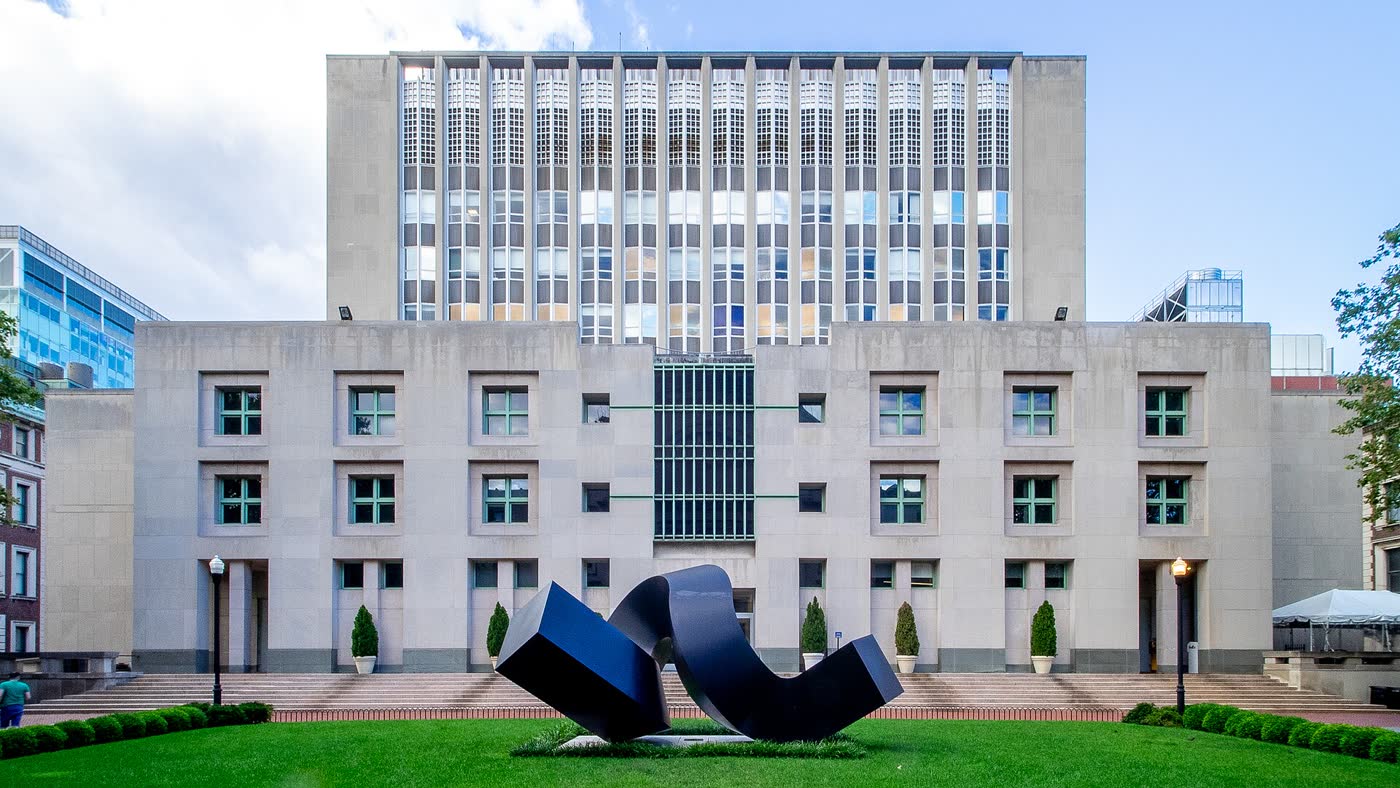
He reads Benjamin Graham's book and calls it "by far the best book on investing ever written." He enrolls at Columbia Business School to study under Graham and earns the only A+ Graham ever gave.
"Price is what you pay. Value is what you get."Buffett, 2008 letter, distilling Graham
Your manic-depressive business partner
Graham imagined a partner called Mr. Market who offers you a price for the business every day. Some days he is euphoric, some days he is in despair. The business itself (the green line) grows steadily. Buy when he is gloomy, sell when he is giddy, and try to beat simply holding for all 40 days.
- Saturday, January 1951
Knocking on GEICO's door
Learning that Graham is chairman of GEICO, he takes the train to Washington on a Saturday. The building is locked. He knocks until a janitor lets him in, then finds the only executive working that day, Lorimer Davidson, who spends four hours explaining the insurance business to him. He puts about three-quarters of his savings into GEICO stock.
- 1952 – 1956
Marriage, stockbroking, then Graham-Newman
He marries Susan Thompson in 1952 and takes a Dale Carnegie public-speaking course because he is terrified of speaking. He badgers Graham for a job and in 1954 joins Graham-Newman in New York. When Graham retires in 1956, Buffett, now 26, goes home to Omaha with about $174,000.
The partnership years
Thirteen years and no losing year.
- 1 May 1956
Buffett Associates, Ltd.
Seven limited partners, mostly family and friends, put in $105,000. Buffett puts in $100. He runs it from a bedroom at home and keeps a quarter of the profits above a 6% hurdle.
- 1958
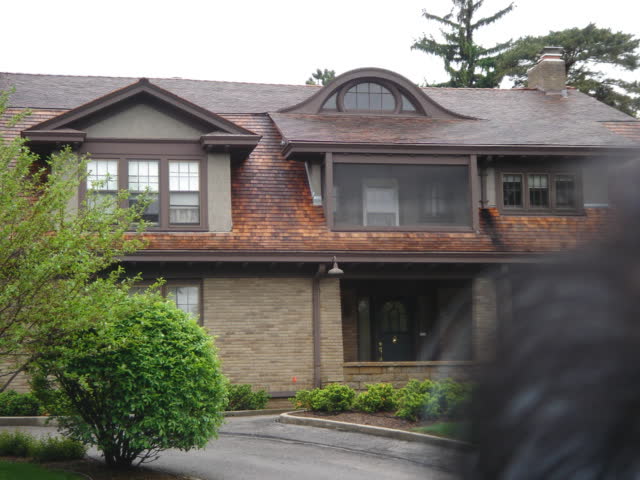
The house on Farnam Street
He buys a five-bedroom stucco house in Omaha's Dundee neighbourhood for $31,500. He still lives there.
Never a down year
Buffett Partnership annual results before fees vs the Dow Jones Industrial Average, including dividends. Over the whole period the partnership compounded about 29.5% a year, against about 7.4% for the Dow.
- 1964
American Express and the salad oil scandal
A fraud at a commodities warehouse leaves American Express facing huge claims, and its stock collapses. Buffett watches people in Omaha restaurants keep using their Amex cards. He puts about 40% of the partnership's assets into the stock and makes a large profit.
- 1969
He shuts it down
Saying he can no longer find bargains in a speculative market, he closes the partnerships. Investors can take cash or shares in one of the holdings: a New England textile company called Berkshire Hathaway. Buffett's own stake is worth about $25 million. He is 39.
A mill, an insurer and a candy shop
How a dying textile business became the base for everything else.
- 1962 – May 1965
The "$200 billion mistake"
He starts buying Berkshire Hathaway, a struggling New Bedford textile maker, at about $7.60 a share. In 1964 its boss, Seabury Stanton, offers to buy his shares at $11.50, then sends a written offer at $11.375. Annoyed by the shaved eighth of a dollar, Buffett buys control instead and fires Stanton in May 1965. In 2010 he called it his "$200 billion mistake": the money would have done far better in a good business from the start.

An eighth of a dollar per share started it. Berkshire closed its last textile mills in 1985.
- March 1967
National Indemnity, and the idea of float
Berkshire buys Omaha insurer National Indemnity for $8.6 million. Insurers collect premiums now and pay claims later. The money they hold in between, the float, can be invested. It becomes Berkshire's engine.
How the float machine works
Berkshire's float grew from $39 million in 1970 to about $171 billion in 2024. Because its insurers usually make an underwriting profit, that money has cost less than nothing to use.
- January 1972
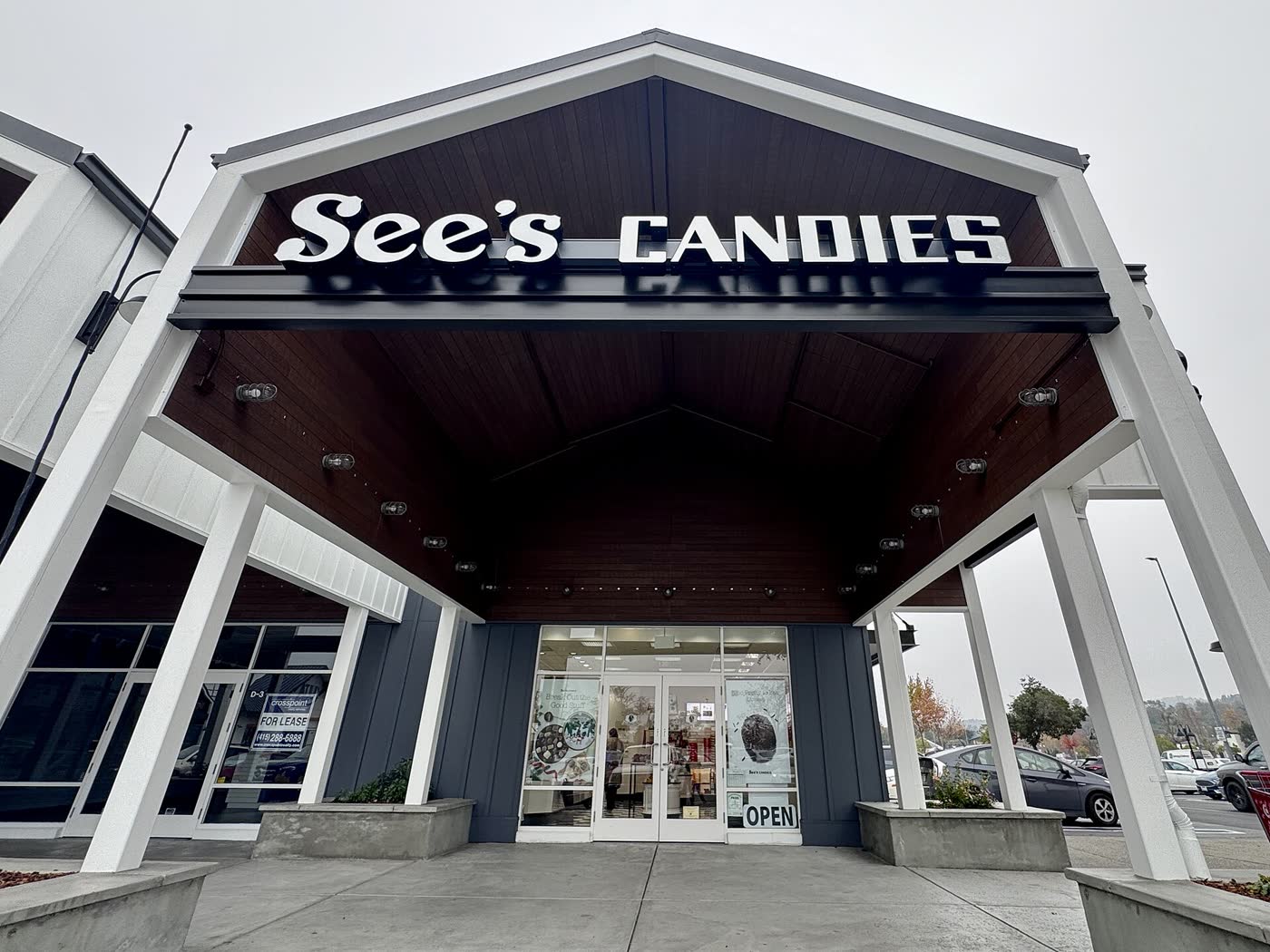
See's Candies: paying up for quality
Pushed by Charlie Munger, Berkshire pays $25 million for See's, three times its book value. See's has since sent Berkshire about $2 billion in pre-tax profit while needing little new capital. It teaches Buffett to buy wonderful businesses at fair prices rather than fair businesses at wonderful prices.
- 1973
The Washington Post
In a bear market Berkshire buys about $10.6 million of Washington Post stock. Buffett joins the board and becomes a close adviser to its publisher, Katharine Graham. By 2014 the stake is worth about $1 billion.

- 1978
Munger becomes vice chairman
Charlie Munger, an Omaha-born Los Angeles lawyer Buffett met at a dinner in 1959, formally joins Berkshire as vice chairman. They run it together for 45 years.
Coke, a scandal and the bubble
Big, simple bets, and a public test of character.
- 1983
Mrs. B and a handshake deal
He buys 90% of Nebraska Furniture Mart from Rose Blumkin, a Russian immigrant who started it with $500, for about $55 million. There is no audit, only a one-page agreement and a handshake. She keeps working there until she is 103.
- 1988 – 1989
Coca-Cola
After the 1987 crash Berkshire spends about $1 billion on Coca-Cola stock, then the largest investment it has ever made. By 1994 it owns 400 million shares at a total cost of about $1.3 billion. It has not sold a share since.
The stake pays for itself again every 19 months
Berkshire paid about $1.3 billion for its 400 million Coca-Cola shares. At $2.04 a share, Coca-Cola's 2025 dividend pays Berkshire about $816 million a year, roughly 63% of the original cost, every year.
- August 1991
Saving Salomon Brothers
A trader at Salomon, where Berkshire has a $700 million stake, is caught submitting false bids at US Treasury auctions. Buffett becomes interim chairman to save the firm and tells Congress how he will run it.
"Lose money for the firm, and I will be understanding. Lose a shred of reputation for the firm, and I will be ruthless."Testimony to Congress, September 1991
- 1993
Dexter Shoe, his worst deal
He pays $433 million in Berkshire stock for a Maine shoemaker whose business soon disappears to cheaper imports. Because he paid in Berkshire shares, he later calculated the real cost at billions of dollars.
- January 1996
GEICO comes home
Forty-five years after his Saturday visit, Berkshire buys the half of GEICO it doesn't already own for about $2.3 billion.

- 1998
General Re and Dairy Queen
Berkshire buys reinsurer General Re for about $22 billion in stock and International Dairy Queen for about $585 million.

- December 1999
"What's wrong, Warren?"
Buffett refuses to buy technology stocks he doesn't understand. Berkshire's stock lags badly, and the press says he has lost his touch. A few months later the dot-com bubble bursts and he is proved right.
The great giveaway, and the crisis
The biggest pledge in history, then lender of last resort.
- March 2003
"Financial weapons of mass destruction"
In his 2002 letter he warns that derivatives are "time bombs," five years before they help bring down the banking system.
- 26 June 2006
The biggest gift in history
Buffett pledges to give away 85% of his Berkshire shares, most of it to the Bill & Melinda Gates Foundation in annual instalments. The pledge is worth about $37 billion at the time.
- March 2008
The richest person in the world
Forbes ranks him number one, at about $62 billion.
- 23 Sep & 16 Oct 2008
"Buy American. I Am."
In the middle of the panic Berkshire puts $5 billion into Goldman Sachs for preferred shares paying a 10% dividend, then $3 billion into General Electric. In a New York Times op-ed he writes that he is buying American stocks with his own money.
"Be fearful when others are greedy, and greedy when others are fearful."Buffett, 1986 letter; repeated in the October 2008 op-ed
- November 2009
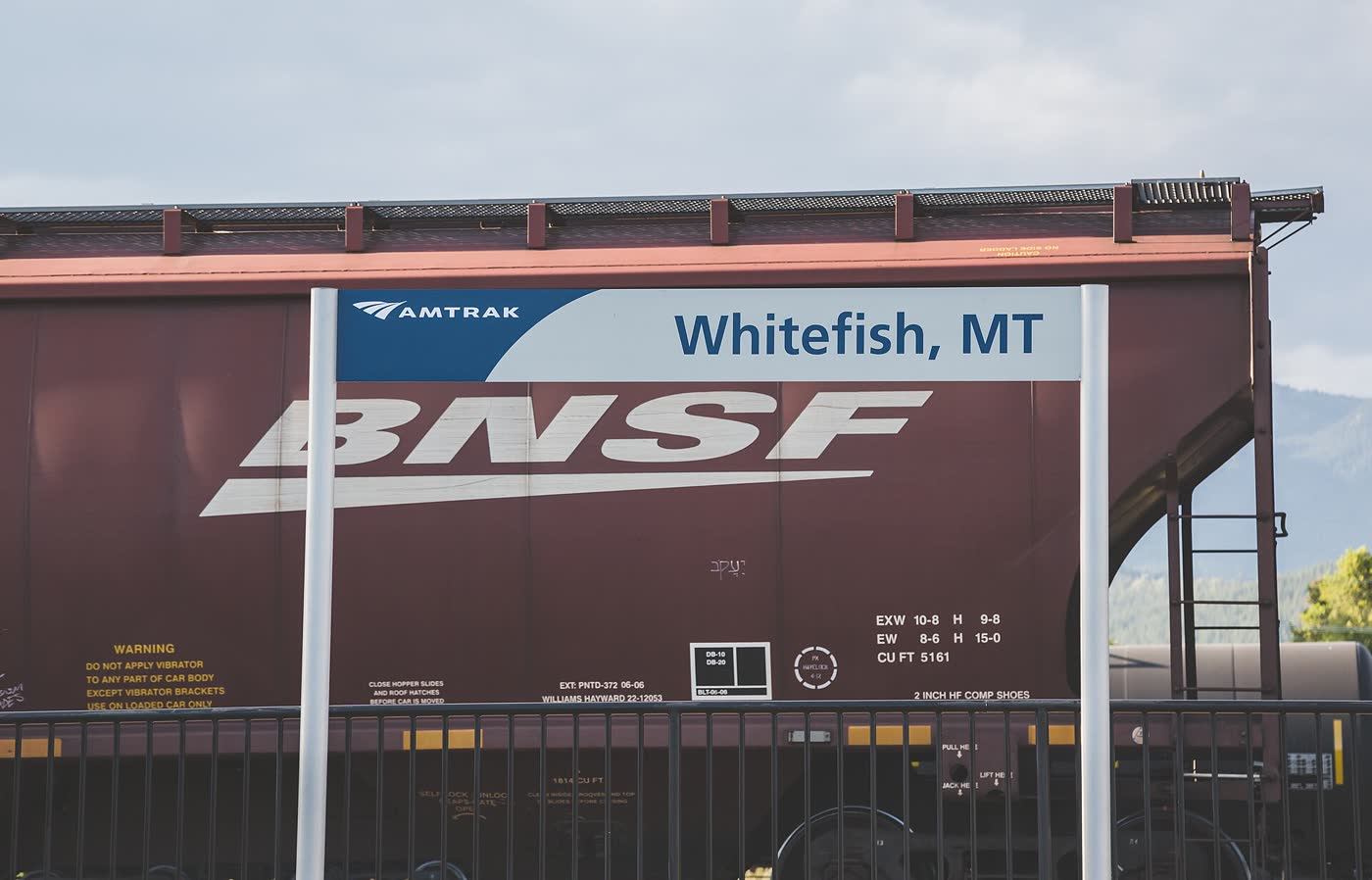
BNSF: "an all-in wager on the economic future of the United States"
Berkshire agrees to buy the rest of the BNSF railroad in a $44 billion deal including debt, its largest acquisition at the time.

- 2010
The Giving Pledge
With Bill and Melinda Gates he launches the Giving Pledge, asking billionaires to promise at least half their wealth to charity.
- 15 February 2011
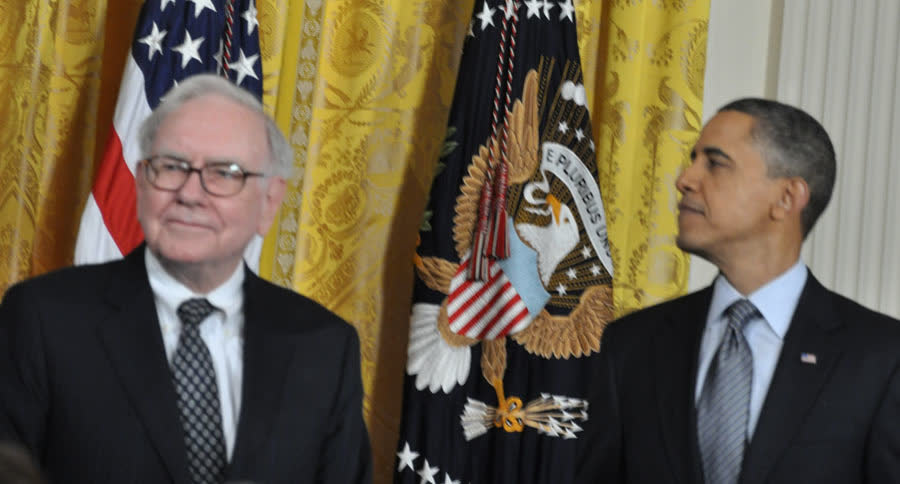
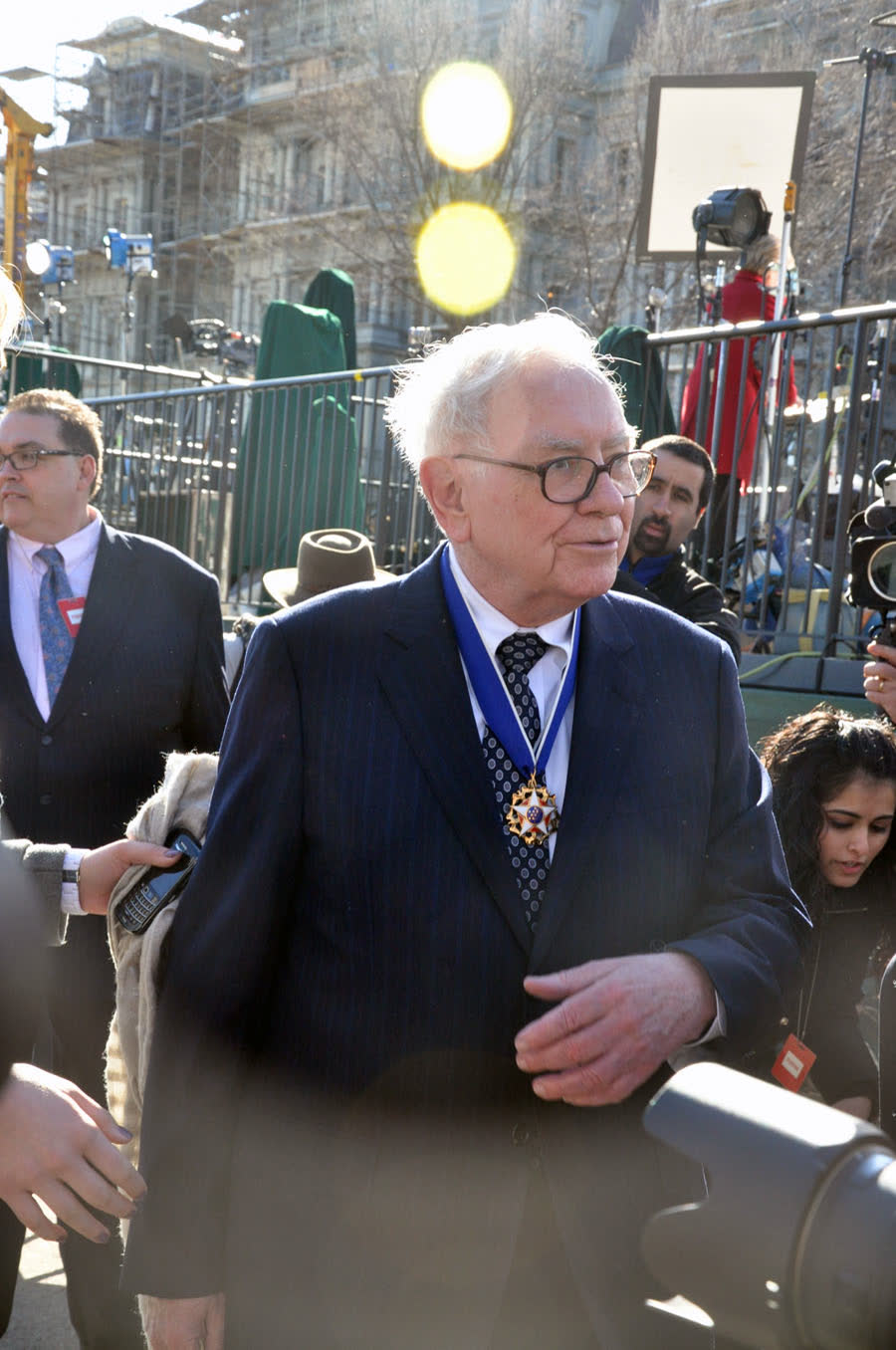
Presidential Medal of Freedom
President Obama awards Buffett the nation's highest civilian honour.
The White House, 15 February 2011. Two excerpts from the official ceremony film: President Obama's remarks about Buffett, then the citation and the medal. About 2 minutes, with sound.
Elephants, and an iPhone
Huge deals, one huge mistake, and his best stock bet ever.
- August 2011
Bank of America
He invests $5 billion in Bank of America preferred shares, an idea he says came to him in the bath. It becomes one of Berkshire's largest holdings.

- 2013 – 2019
Heinz, then Kraft Heinz
With 3G Capital, Berkshire buys Heinz for $23 billion in 2013 and merges it with Kraft in 2015. In 2019 Kraft Heinz writes down $15 billion of brand value, and Buffett admits Berkshire overpaid.

- 2016 – 2018
Apple
A stock-picker on his team starts buying Apple in 2016. Buffett, who long avoided tech, piles in after seeing Apple as a consumer brand people won't give up. Berkshire spends about $31 billion for around 5% of the company.
$31 billion in, about $174 billion at the peak
Market value of Berkshire's Apple stake at year-end, approximate. In 2024 Berkshire sold about two-thirds of it, partly for tax reasons, and kept about 300 million shares. Apple was still its largest stock holding.
- January 2016
Precision Castparts
Berkshire pays about $32 billion for the aerospace parts maker, its biggest deal ever. In 2020 it writes down about $10 billion of the value after aviation collapses in the pandemic.
The last chapter as CEO
Japan, a trillion dollars, a record cash pile and a handover.
- May 2020
Selling the airlines
As Covid grounds planes, Berkshire sells its stakes in the four big US airlines, often near the bottom. "The world has changed," he says.
- 30 August 2020
Japan's trading houses
On his 90th birthday Berkshire reveals 5% stakes in Itochu, Marubeni, Mitsubishi, Mitsui and Sumitomo. It later raises them, and they become one of his most profitable late bets.
- 28 November 2023
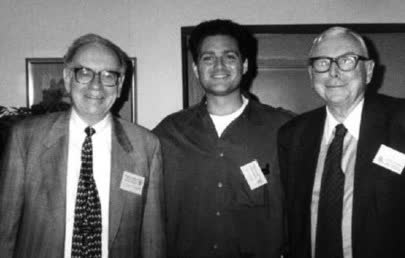
Charlie Munger dies, aged 99
His partner of 64 years dies a month short of his 100th birthday. "Berkshire Hathaway could not have been built to its present status without Charlie's inspiration, wisdom and participation," Buffett writes.
- 28 August 2024
A trillion-dollar company
Berkshire becomes the first US company outside the tech sector to be worth $1 trillion.
- 2024 – 2025
The cash mountain
After selling much of its Apple and Bank of America stock and finding little to buy, Berkshire's cash and Treasury bills reach a record $381.7 billion by September 2025.
$381.7 billion, in $100 bills, would reach the Space Station
That is 3.8 billion bills. Each is 0.11 mm thick, so the stack would be about 417 km tall, roughly the height at which the International Space Station orbits (around 400–420 km).
- 3 May 2025
"The time has arrived"
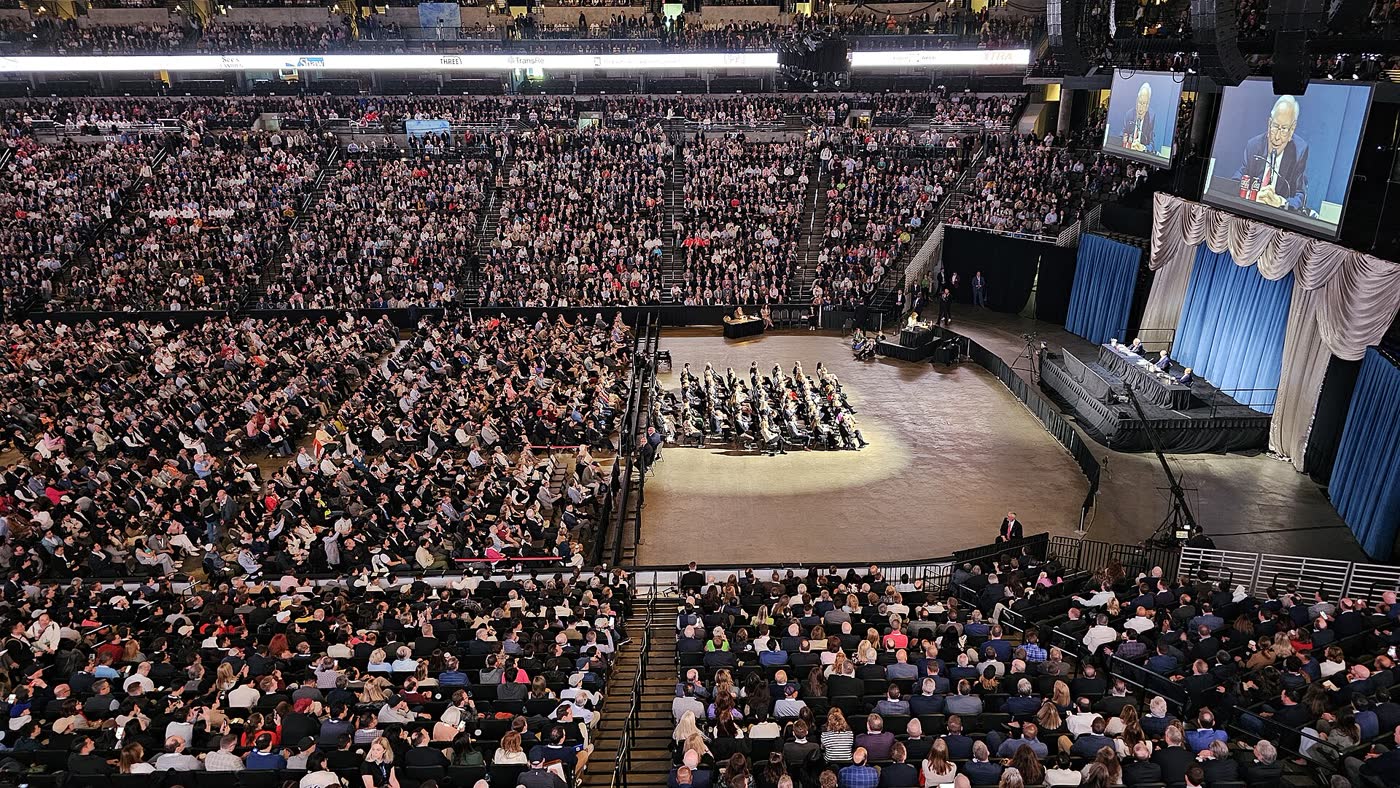
At the end of the annual meeting in Omaha he tells 40,000 shareholders, without warning, that Greg Abel will take over as CEO at year-end. He stays on as chairman.
- 2 October 2025
One last big deal: OxyChem
Berkshire agrees to buy Occidental Petroleum's chemicals business for $9.7 billion. It closes on 2 January 2026 for about $9.5 billion.
- 10 November 2025
"I'm going quiet"
In his last letter he says he will no longer write the annual report or speak at the meeting. He converts 1,800 A shares into 2.7 million B shares and gives them to his family's four foundations, about $1.3 billion. He will keep writing a Thanksgiving note each year.
- 1 January 2026
The Abel era
Greg Abel becomes CEO. Buffett, 95, still comes to the office every day. By mid-2026 Abel has started putting the cash to work, with Berkshire a net buyer of about $20 billion of stock in the second quarter.
His rules, his habits
The arithmetic, the breakfast and the lunch auction.
If your grandparents had invested in 1965
Based on Berkshire's own figures: per-share market value up 5,502,284% from 1965 to 2024, against 39,054% for the S&P 500. The grey bar is drawn to scale.
Breakfast depends on the market
Driving to the office, Buffett stops at McDonald's and spends $2.61, $2.95 or $3.17 depending on how the market is doing, as he explained in the 2017 HBO film Becoming Warren Buffett. His wife put the exact change in a cup by the car.
The charity lunch auction
From 2000 to 2022 Buffett auctioned a lunch with himself to raise money for the Glide Foundation, which helps homeless people in San Francisco. Altogether it raised about $53 million. Selected winning bids:
Ninety-six years on the same hill.
Buffett is 96. He still lives in the house he bought in 1958 and still goes to the office in Omaha, though he has handed the company to Greg Abel and stopped writing the letters. His remaining fortune, about $145 billion, is meant to go to a trust run by his three children after his death and to be given away within ten years.